

✷
One of the most important skills for a researcher or academic to have is the ability to evaluate sources. It’s necessary to have a discerning eye when digging for resources, as you can easily find yourself wrapped up in a source that’s actually detrimental to your research.
✷
Just because something is written down and published, doesn’t mean that it’s full of accurate or unbiased information. In fact, every source under the sun is biased in one way or another. It’s your job to be aware of these biases and how they interact with whatever you’re reading.
✷
Let’s not get ahead of ourselves, though. We’re going to start with basic definitions of the two types of sources— primary and secondary. You may be familiar with them already from school, but it’s always good to have a refresher.

✷

Image Courtesy of Patrick Tomasso on Unsplash
✷
Primary VS Secondary Sources
✷
PRIMARY
A primary source is one that came directly from the people that directly experienced the time and subject that you’re researching. For example, a person living in Ancient Greece and writing about their local temple would be a primary source for research about said temple. My journal would be a primary source for the events of my life. Additionally, artifacts such as pottery or weapons can be primary sources for the material culture of the time they hail from.
✷
SECONDARY
A secondary source is one that was written or created after the time period or event that you’re studying. If someone today were to write about the words of the ancient greek person in the above example, the modern writing would be considered a secondary source. Similarly, if someone wrote a biography about my life after I died, it would be considered a secondary source.
✷
If you’re reading a secondary source, a good way to check its validity is to see if it cites any primary sources. If it doesn’t have any citations, you should view it with skepticism. After all, anyone can write anything on any topic they want. Citations are the way that academics and researchers show their work and prove that they’re not pulling facts out of the ether.
✷
🤔🤔🤔
Now that we have those definitions down, it’s time to look at some facts you should consider when you’re evaluating the validity of a given source. Going through all of these for every source would be incredibly rigorous. As you’re doing your research, you’ll get a feel for which sections are particularly relevant, and which sections you can gloss over.
✷
There is one exception— you should probably go through all of the sections if your work has anything at all to do with propaganda. You’ll get an understanding for why this is as we move forward.
✷
Image Courtesy of Hasnain Sajid Hakeem on Unsplash
✷
Who is The Author?
✷
As all people carry within them a plethora of biases, looking into the author(s) of your source may be the most important step in your evaluation journey. Read some basic biographical information about them, and take notes on anything that stands out to you.
✷
Is there any part of their identity that might be a source for biases in their writing? Do they have some other motivations that you should be aware of? With older authors especially (though more modern authors are certainly not exempt!), you may come across bigoted beliefs and/or actions.
✷
In particular, you’ll want to pay attention to information about the author if your source is by a member of a colonizer group writing about those they colonized. That would be a primary source for the beliefs of the colonizer group, but a secondary source for information about the culture and beliefs of the colonized group.
✷
Unfortunately, sometimes these sources are the only ones that have survived, and we must make do. It’s just important to remember that the beliefs of the author will inevitably alter what they write about and how they present it.
✷
Image Courtesy of Heather Zabriskie on Unsplash
✷
When Was It Written?
✷
This is mainly for historical sources, but can be helpful for modern ones as well.
✷
Some things to keep in mind are:
✷
When was your source written? Does it contain biases from the society at the time? What was happening in the world at this time? Have there been modern advances since the time of this source’s conception? How does this effect your understanding of the material?
✷
Something written during the time of Classical Greece will approach a topic differently than a source from Hellenistic Greece writing about the same exact topic. Cultures and their beliefs and values shift and change over time. Even something written in 2016 will focus on different parts of a subject than something written in 2020, for example. An author from 2016 writing about grocery shopping wouldn’t mention a toilet paper shortage like an author from 2020 might.
✷
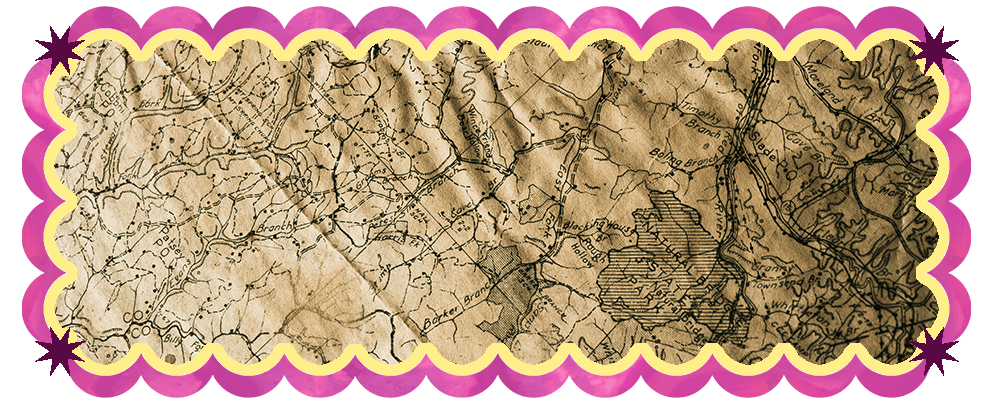
Image Courtesy of Nik Shuliahin on Unsplash
✷
Where Was it Written?
✷
We’re considering all aspects of the environment that created our source, so we also have to consider where it was written. The relevance of this information will vary between your sources and research project(s), but it’s certainly worth mentioning here.
✷
The location that a source was written at could be particularly helpful if you’re struggling to figure out if your source is Primary or Secondary. Historical events are always rooted in one location or another. If, for example, you’re looking for a primary source about the American Industrial Revolution, you’ll likely be looking for writings produced in the US rather than a source from England.
✷
Even if you’re writing about something that’s not tied to location, it may still provide you a greater understanding of your sources to know where they were written. The environment and conditions around an author effect their writing without a doubt— regardless of their own awareness of how it plays out.
✷
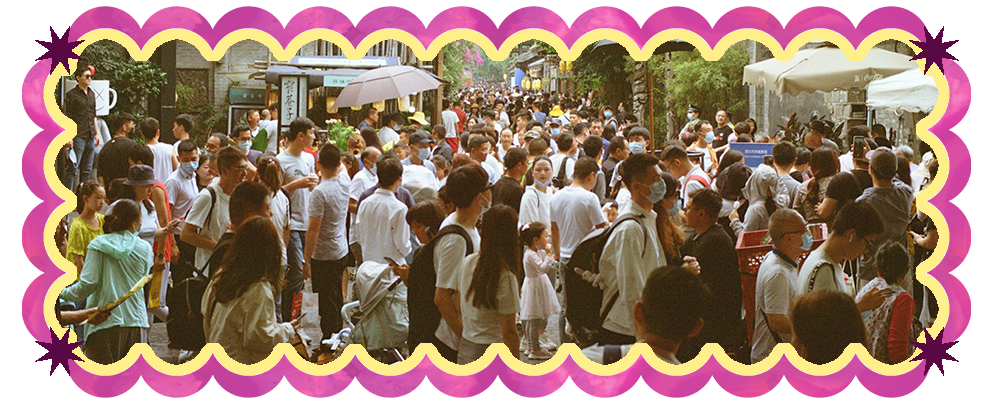
Image Courtesy of Ulrich and Mareli Aspeling on Unsplash
✷
For Whom Was it Written?
✷
One of the last facts you should consider when evaluating your sources is the audience that they were written for. An author writing for a scholarly audience is going to write differently for the general public, even on the same topic.
✷
You’ll see this most obviously when reading academic articles, as most will assume that you have certain background knowledge. If you don’t have this background information, you might consider starting with a source written for the general public, rather than spending hours searching discipline-specific terminology.
✷
Who a source was written for is also particularly relevant if you’re researching anything to do with politics and/or propaganda. A news website or a politician are both going to be speaking to their particular support bases. They’re aware of the basic beliefs of their followers, and are thus compelled to create content that confirms said beliefs. Not everything a news station or politician says or writes is going to be 100% true, and it helps to know which biases they’re most rewarded for playing into.
✷
Sometimes, articles are written with the goal of convincing a particular group of people to subscribe to a certain set of beliefs. Are you part of this target audience? If so, how are you going to dig past the convoluted rhetoric to find what is actually being said? Who does it benefit if you adopt these beliefs? What aspects of your identity is the source calling upon in an attempt to influence you?
✷
Not everything every source wants you to believe is going to be inherently negative or harmful, but you should stay informed of their potential agendas regardless.
✷
Image Courtesy of Ling App on Unsplash
✷
A Note About Translations
✷
Translating texts to other languages is an incredibly important skill that also happens to be fraught with potential struggles. There is no such thing as a perfect translation, save for perhaps one written by a bilingual author translating their own work.
✷
If you do any research that involves historical texts (especially those written in “dead” languages), you’ll likely find historians arguing over translations. You may also come across a source that has been translated multiple times by different authors, and each translation will read slightly differently.
✷
Sometimes, there may be a word in a text that has no English equivalent. In this case, the translator would find the closest equivalent word or phrase, and perhaps make a footnote discussing their choice. These are the instances where you’ll find the most variety between different translations of the same text.
✷
If you’re reading a translated text, and something feels wrong or a line seems out of place, it’s very possible there’s an error in the translation. If you can, see if you can find an alternate translation. It’s hard to tell which one is correct if you don’t speak the original language, but it’s at the very least constructive to know of alternate translations.
✷
Lastly, be mindful when using translated texts in arguments where exact verbiage is crucial. Historians are generally expected to understand the language(s) of their area of specialty for this reason. You may also see an author quote a source within its language of origin, rather than quote it from a translation. This may be annoying when you’re trying to do research, but it’s done this way for accuracy’s sake. Translation is an imperfect science, and it’s always best to rely on your own personal translations when you can.
✷
Image Courtesy of NEOM on Unsplash
✷
In Conclusion…
✷
Evaluating sources can be a difficult and arduous process. I’m not saying you have to go through every one of these topics with everything you read, but they will undoubtedly improve your understanding of your source. I recommend keeping a list of these questions visible while you do your research.
✷
For ease of screenshots and/or copy/pasting, I’ve rewritten the main four questions below:
- Who is the author?
- When was it written?
- Where was it written?
- For whom was it written?
✷
Resources and Further Reading
✷
Distinguish Between Primary and Secondary Sources by UC Santa Cruz Library
Historical Research Methods: Evaluate Sources by Augusta University
Evaluating Sources by Harvard University
Artifacts as Primary Sources for Studying Material Culture by bogprism
Free Resources to Help You Research Any Topic Like an Academic by bogprism
✷


Leave a comment