

✷
Yep, we’re back at it again. There’s no shortage of museums with online digital collections hiding gems of inspiration. I’ll be going over a few more museums, their digital collections, and copyright information. I’ve tried to pick collections with majority open access copyright images, but there’s a few stipulations here and there.
✷
If you missed the first installment in this series, you can check it out here!
✷
The museums and collections we’ll be looking at today are as follows:
- The Walters Art Museum – Online Collection
- The Hermitage Museum – Digital Collection
- The Minneapolis Institute of – Art Collection
- The Art Institute of Chicago – Collection
- The Staatliche Museen zu Berlin – Collections Online > Research
- The National Museum of Denmark – Online Collections
✷

✷

Llama Effigy by an Indigenous Chancay Artist from the Walters Art Museum Digital Collections under a CC0 License
✷
The Walters Art Museum Online Collection
✷
The Walters Art Museum is near and dear to my heart, having visited it many times when I lived in Baltimore. I’m surprised I didn’t include their collection in the first blog in this series. Their database is robust and easy to navigate.
✷
Images of works in the Walters digital collection are for the most part available for any use under a Creative Commons Zero (CC0) copyright license. This means you can download them and use them for any project you want– commercial or not. For those of you interested, the Walters specific copyright info page can be found here.
✷
A small thing to note here is that some images of works in the museum’s temporary possession are not free for use. This is mostly more contemporary works that still retain other copyright licenses. It’s a good practice to double check copyright information for each image you decide to use. To do this, simply click an entry you’re interested in. Directly underneath of the image should be a small line of text informing you which license the image is shared under.
✷
✷
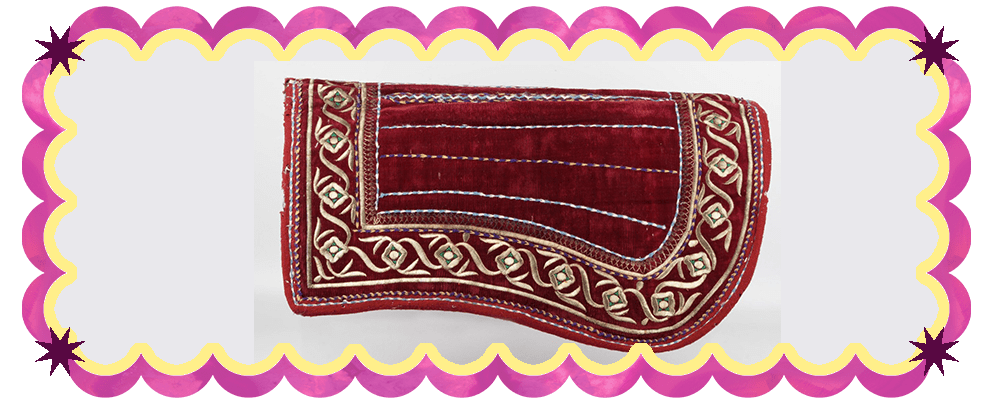
Saddle Blanket from Central Asia in the second half of the 19th Century, from The Hermitage Museum
✷
The Hermitage Museum Digital Collection
✷
The Hermitage Museum, located in Russia, has a vast Digital Collection. It’s great for finding historical art and artifacts ranging from sculptures to prints and textiles. Of particular note is the category “horse equipment“, which I’ve yet to see in any other collections.
✷
Copyright is different in Russia, so I’m going to link The Hermitage Museum’s policy here. From what I can gather, usage of the images in the database is permitted as long as it’s for personal or educational purposes. It’s also possible to use them for publications, but you’ll need to contact the museum to see about buying usage rights.
✷
It’s worth noting that not all the image entries have an easy download button, so you might have to take a screenshot if worst comes to worst. The only other hurdle you might run into is that the website is originally in Russian. They have an English option, but you should also be able to use your browser’s translation function if that doesn’t work.
✷
✷
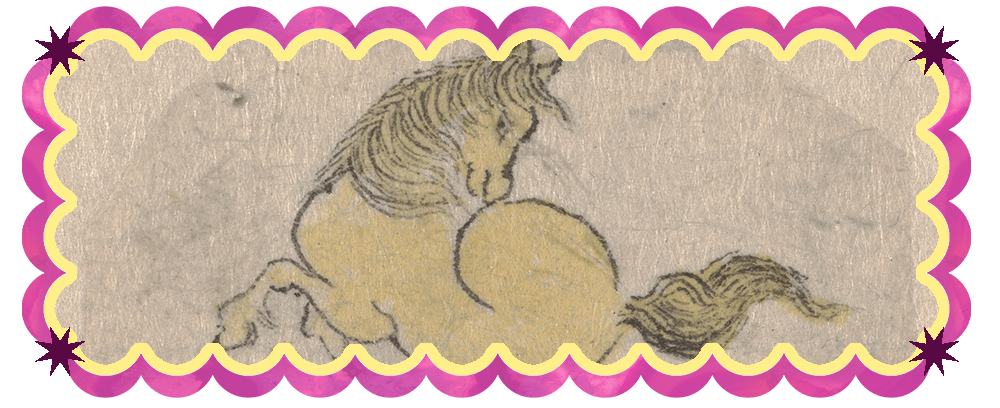
Horse, done with ink and light colors on paper by Yamamoto Baiitsu during the first half of the 19th century. Housed by the Minneapolis Institute of Art and in the Public Domain
✷
The Minneapolis Institute of Art Online Collection
✷
The Online Collection by The Minneapolis Institute of Art is easy to overlook, but it holds a great wealth of art and artifacts for you to get inspiration from. The link I’ve used is to the main page, featuring a search bar at the top, a few links, followed by a separation of the collection by department.
✷
When looking for something specific, I like to use the search function to find it. After you type your search and hit enter, the website will pull up anything that matches. Those of you concerned about copyright, there is a way to filter it. Once your initial search loads, you’ll want to click the button on the right labeled “advanced”. Then, look to the bottom of the panel that it just brought up. The second option from the left, labeled “Rights”, is where you’ll find the links to refine your search by copyright status.
✷
When I feel like wandering, I navigate to the original search home and click on one of the departments, or using the “Explore” link. Going by department is good if you’re looking to familiarize yourself with some of the collection through broad categories. That said, it’ll usually only show you a few collection highlights, not everything from each department. The Explore link will lead you to a few sections. Most notably, there is a section for artworks which have audio files talking about them attached. It also brings up “Art Stories”, which is a multimedia project by the museum that aims to enhance the experience of the works.
✷
Lastly, I’d like to also advise you to check out the rest of the Minneapolis Institute of Art website. There’s a lot more to the website than just the digital collection. There’s a ton of interesting information about topics such as conservation projects and how the museum manages the collection. You can also listen to episodes of their podcast The Object, which has experts talk about art and art history. Overall, I’m very impressed by the website and it’s content.
✷
✷
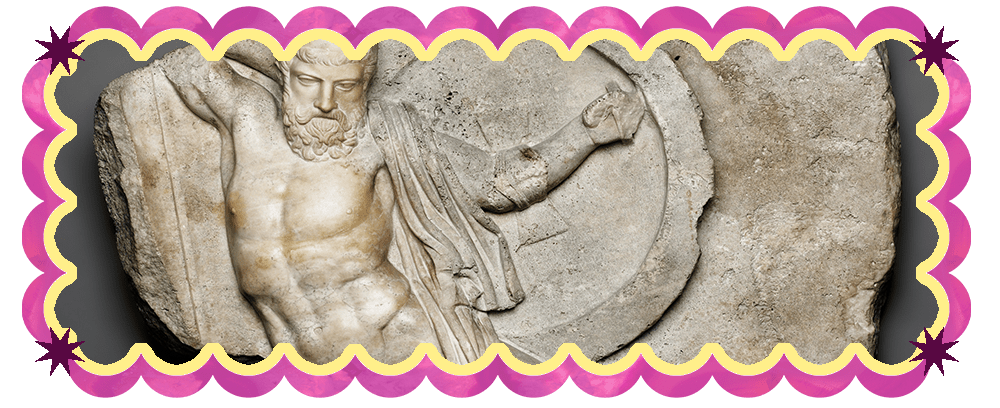
Relief of a Falling Warrior from Rome in the 2nd Century, shared under a CC0 license by The Art Institute of Chicago
✷
The Art Institute of Chicago Collection
✷
I’m honestly surprised that the online Collection by the Art Institute of Chicago didn’t make the cut in the first blog. The public domain search alone boasts a whopping 61,009 results. Expanding the filters reveals a plethora of options, too. This is the first archive that I’ve seen with a “color” filter! Not all of the items have additional text from the curators, but a good deal of them do.
✷
These art schools are really knocking it out of the park, to be honest with you. The Art Institute of Chicago’s collection is clear, easy to filter, and very informative. You can really feel the care put into creating and maintaining this archive. And for those of you looking to use images freely, simply filter for “Public Domain”. This means the image is shared under a CC0 copyright license, and can be used for any reason personal or commercial.
✷
That’s about all I have to share with you about this collection, though. It’s so straightforward that I don’t feel like I need to explain exactly how to use it step by step. I don’t really have any complaints or gripes with this archive at all.
✷
✷
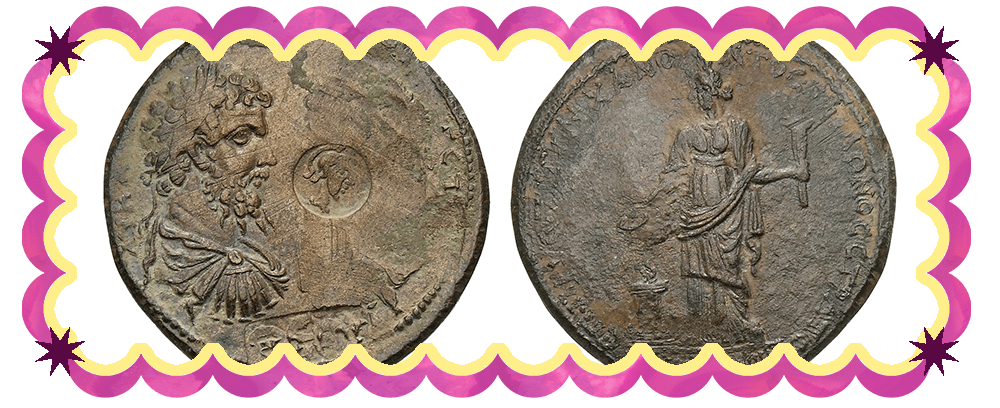
A coin from 197-211 CE depicting Septimius Severus on one side, and the Goddess Hekate (holding a torch and offering bowl) on the other. Used under a CC BY-SA 4.0 license granted by the Staatliche Museen Zu Berlin
✷
The Staatliche Museen zu Berlin Collections
✷
I got lost in the digital collections of the Staatliche Museen zu Berlin for more time than I’d like to admit. Their main website pages have an English language version, though when you go in to search the collections you’re going to have to use an in browser translator for detailed information. The translation won’t be perfect, but it’s well enough to get you interested and continuing to pull on those threads.
✷
So what about the copyright situation?
✷
It can vary between entries, but generally speaking the museum shares their work for free with some limitations. They actually use a creative commons international license, which is the same copyright system we use in the US (minus the international part). Most often, this is the Attribution-ShareAlike 4.0 International license, or CC BY-SA.
✷
The link above explains in detail, but here’s the just of it: you can use the image for any purpose (personal or commercial), you can change and build upon the image in any way you want, BUT you have to give proper credit and link the license when you use it anywhere. There’s also the “ShareAlike” portion of the license. All this means is that if you change or build upon any of the image, you have to distribute it under a CC BY-SA license.
✷
Throughout the archives, there are occasionally other licenses and rules for use that are different than the CC BY-SA license. Clicking on any search result and translating the following page should list and link any usage rules/laws directly underneath the image of the object/art/artifact. Additionally, if you click the download icon on the right side of the image, a popup will appear informing you of the usage rights. It can be a little confusing at first, but they’ve done a good job of making the information easy to find.
✷
✷
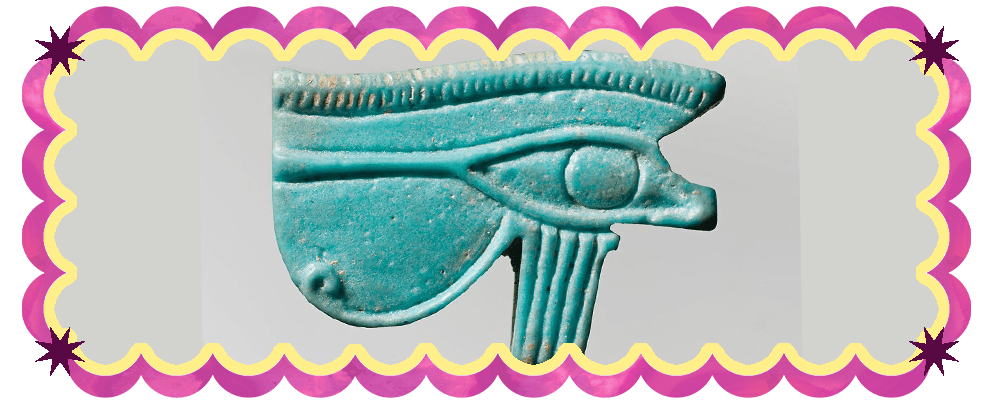
Glazed pottery protective Eye of Horus amulet, provided by the National Museum of Denmark Online Collections under a CC BY-SA license.
✷
The National Museum of Denmark Online Collections
✷
Last but certainly not least are the online collections of The National Museum of Denmark (Nationalmuseet). Translating the pages/entries is again necessary here. These aren’t the easiest archives to sort through due to limited filtering options, but the collection includes some real gems I wouldn’t want to pass up. There’s a database of photographs of Denmark, and a “Museum Objects” database.
✷
Garment/fashion artists in particular should check out the Museum Objects link. One of the few filters you can do is by collection. The “The Clothing Museum” option is an especially good resource for those interested in military uniforms. Those interested in cold weather indigenous clothing/clothing made of furs and skins should filter to the option for the “Ethnographic Collection“.
✷
The copyright situation of The National Museum of Denmark online collections images is pretty similar to that of the Staatliche Museen zu Berlin above. A majority of the images seem to be under that CC BY-SA license, but it’s good practice to check every time. After clicking an entry, you can look at the section of the details labeled “License”, or you can hit the “Download” button. This will bring up a popup providing multiple download options in green boxes. In white writing below the top two boxes, the license is also listed.
✷

✷
✷
Where to go Next
✷
I hope that by now you know that there are incredible sources of art and information just waiting to be discovered within museum online digital collections. Pinterest is all well and good, but I find that doing museum searches helps me to be more intentional about my searches and what it is I actually need for a given project.
Lately, I’ve been saving and inputting pieces I really like into my Tropy archive for extra extra intentionality in the inspiration that I’m choosing to collect. Tropy also has the extra bonus of being a locally stored program. That means it’s on my computer’s hard drive, not the cloud. With how often Pinterest removes images, this seems a necessary step to ensure I have my biggest inspirations. I’ll be writing a detailed blog about Tropy later, but for the time being I thought I’d mention it.
✷
If you haven’t already, check out the first blog in this series for six more online collections to fall into! A lot of museums these days are digitizing their collections, and I’m positive that there are plenty more to share. I may start doing more specific source roundups (one for ceramicists or fibers artists, for example) if I feel like I can compile a decent amount for a given topic. I will also look into specific requests if anyone has one.
✷
Outside of all that, I encourage you to go on your own archive hunts and continue to explore outside of my recommendations. Only you can truly figure out which archives will work best for you; I can only guide you so far.
✷
As always, I welcome feedback, thoughts, and archive links below. I think some discussion could be super fun, and it would help my blog a ton. I will also respond to every comment as well as I possibly can, including answering questions and advice about projects.
✷
✷
Stay safe, stay freaky, stay weird.
-Alex

 bogprism
Leave a comment