

✷
When attempting to reconstruct a modern version of Levantine Paganism, it is helpful and perhaps even necessary to look at surviving texts from the ancient city of Ugarit. I’ll be covering the historical information in the first half of this post, and discuss what it might mean to a modern practitioner in the second half. We may also examine the non-written archaeological record and it’s interactions with the texts in future posts, but for now there’s plenty to cover.
✷
Citations will be listed in-text in the following format:
the source number (listed at the end of the post): the last name of the author: the page number
✷
Ugarit is unique in its volume of surviving written material, as it was destroyed quite suddenly in the late thirteenth century BCE [1: Nakhai: 41]. Fires destroyed many buildings, which in turn baked/fired a number of clay tablets and allowed them to survive to the present day. As a result, the tablets are perfect for learning about the spiritual/religious aspects of the lives of the writing class.
✷
Of course, I have to put a small note here that the writing class was generally the upper class, and we have much less written information about the beliefs of the common people. There are however a few nuggets of detail that allow us to glean a couple of things about the general populace. The writing class sources we do have remain incredibly valuable to our reconstruction nonetheless.
✷
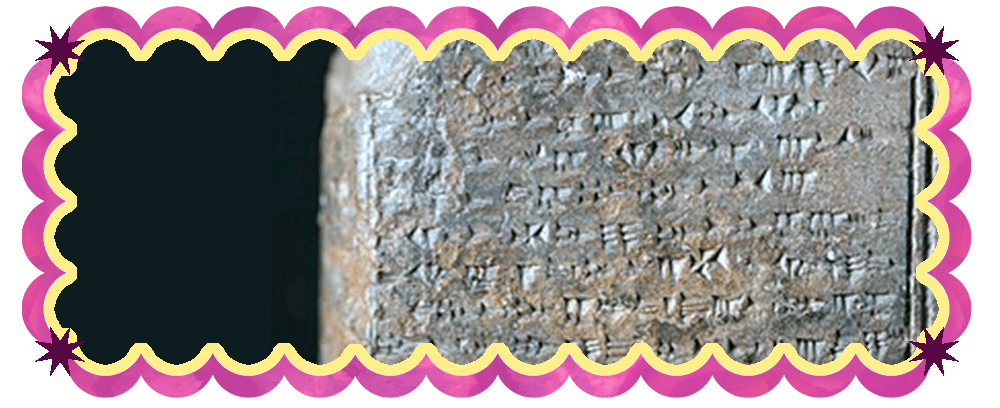
Louvre Museum, CC BY-SA 2.0 FR via Wikimedia Commons
✷
Starting in 1928 all the way to 2011, a plethora of texts written in Ugaritic were discovered at the site. A majority of these excavations were completed by the French, though the most recent included Syrian efforts as well. [2: Wikipedia]. I mention this here because a vast number of said texts have only been translated to French, with a few of the most “important” translated into English. As someone who does not know how to read French, I’ll be focusing on English translated texts and/or English scholarly texts talking about the tablets in this article.
✷
In addition, many of the nitty gritty translation details are still under contention between scholars. Reconstructing an ancient language is no simple task, especially when there’s no proverbial Rosetta stone to guide you. I’m not a linguist, nor am I an expert in ancient near eastern languages, so we’ll be standing on the shoulders of giants in regards to translations. I’ll be citing my sources as we go to make things easy for anyone interested in diving into the scholarly discourse, but for the sake of this blog I’ll just be sharing the perspectives that resonate most with me.

✷
Now that we’ve got that out of the way, let’s dive in to what we can learn about Levantine pagan religious practices from all this ancient writing.
✷
In The Descriptive Ritual Texts from Ugarit: Some Formal and Functional Features of the Genre by Levine, the general information found within the sources is broken down.
✷
“In terms of content, the descriptive ritual records or describes a coherent rite, or more often, a complex of rites. It provides detailed information on the following subjects: 1) sacrificial offerings to specific deities, 2) dates, occasions, and sites where rites are performed, 3) ritual acts, such as purifications and processionals, which compose overall celebrations, and 4) officiants, quite often the king, who had a significant role in the cult (3: Levine: 74).”
✷
Scholar Beth Alpert Nakhai notes the importance of animal sacrifice in the texts from the temple archives.
✷
The types of animals that are sacrificed in a given religious ceremony are also mentioned in the tablets. In The Seven Rituals for the Purification of The King, animal sacrifice takes up a majority of the written instructions. Particular importance also seems to be placed on the variety of animals sacrificed rather than the number of them. Specific organs were also sometimes offered on their own. [1: Nakhai: 41-42]
✷
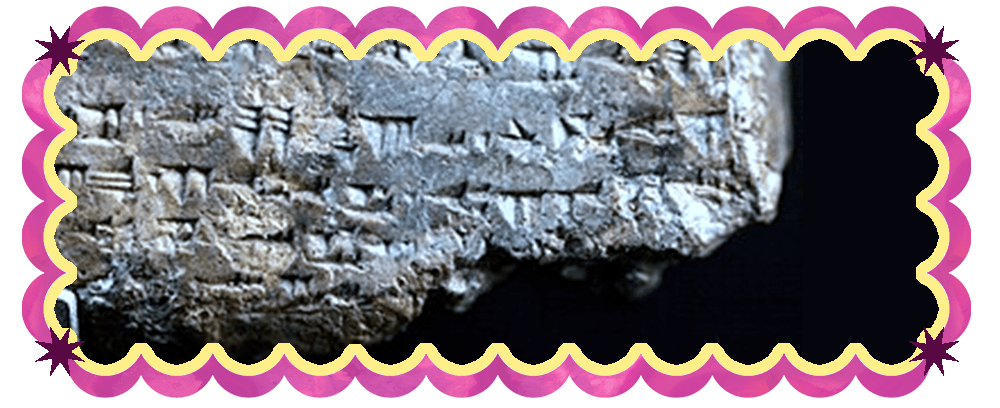
Francesco Bini, CC BY-SA 4.0, via Wikimedia Commons, Part of the Baal Cycle Myth
✷
Their rites weren’t all animal sacrifice, though. Other (typically locally grown) resources such as vegetables, gains, and oils were offered. There also appears to be a common practice of pouring libations (which are liquid offerings). Often the libation was of water and wine.[4: Merlo: 294]
✷
Alongside those were various objects of craft. These were often made with precious materials. Šnpt, a term which appears often in the texts, is to offer a non-animal product and display it elevated for the deity. [1: Nakhai: 42-43]
✷
Most of those objects of craft would likely fall under the category of Šnpt, with the exception of clothes and fabric. Clothing and fabrics were of particular importance, as they were used for dressing statues of deities before they were moved to the temple for rituals including both offerings and sacrifices. Though clothing and fabric often decay, fastenings and ornaments made of longer lasting materials have been found with statues of Gods, allowing us room to speculate on the types of garments used. [1: Nakhai: 42-43].
✷
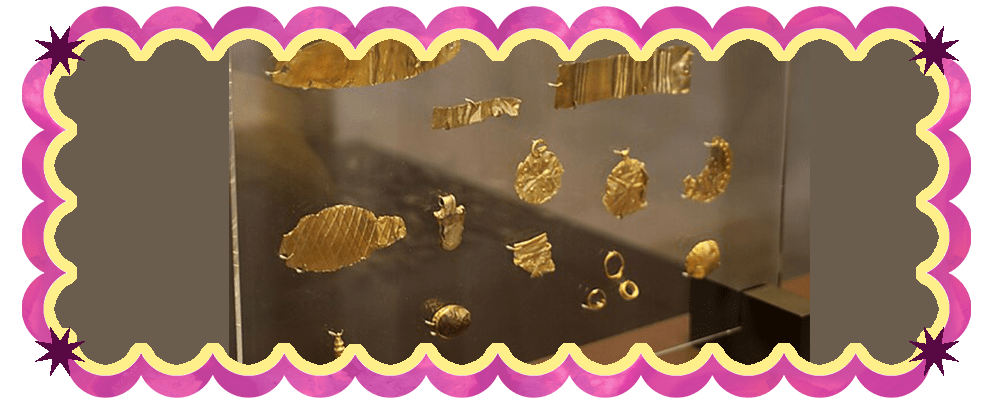
Louvre Museum, CC BY-SA 2.0 FR, via Wikimedia Commons, Gold Ugaritic Adornments
✷
Back to the texts, scholar Paolo Merlo has an excellent overview of some of the sources which have been classified as ritual texts. Such sources were not particularly popular topics of study, as they are incredibly formal and written in a very technical and particular way. Merlo also mentions prescribed formulas, difficult syntax, and long lists of gods as other deterrents to study. [4: Merlo: 287]. Luckily for us, he and a few other scholars have made sense of some of the texts and written them out in an easy to understand format!
✷
Merlo chooses to loosely categorize the types of rituals in the texts as “ritual blood sacrifices, bloodless sacrificial offerings, processions, cultic meals, and enthronements-investitures.” [4: Merlo: 293] That last one there means they were rituals around the ascension to a throne or ceremonies around other public offices. There are also sources that require the recitation of specific words (think prayers and invocations, for example).
✷
The texts of ritual actions involving blood sacrifice often include the term Šrp, which was most likely about the action of burning the sacrifice. Another word popular in the texts is Šlmm. Merlo thinks etymology suggests it could be translated as “communion sacrifice” or “peace sacrifice.” One tablet (Catalogued as KTU 1.115 = RS 24.260:9-10) confirms that Šlmm offerings contained a communal meal from the sacrifices, which was shared amongst the offerers. [4: Merlo: 293]
✷
Most of the rituals we do have include the king in some crucial manner. In particular, the phrase yrths mlk brr is widely attested. It could be translated as ‘the king washes <and is> purified.’ [4: Merlo 297]. The tablets describing this action often detail “a series of ceremonies in which the king takes part” [4: Merlo: 297]. These ceremonies are tied to nightfall or sunset, and result in the purification of the king. Such purification may have been a requirement before the king could participate in various rituals, though that remains speculation. [4: Merlo: 297].
✷
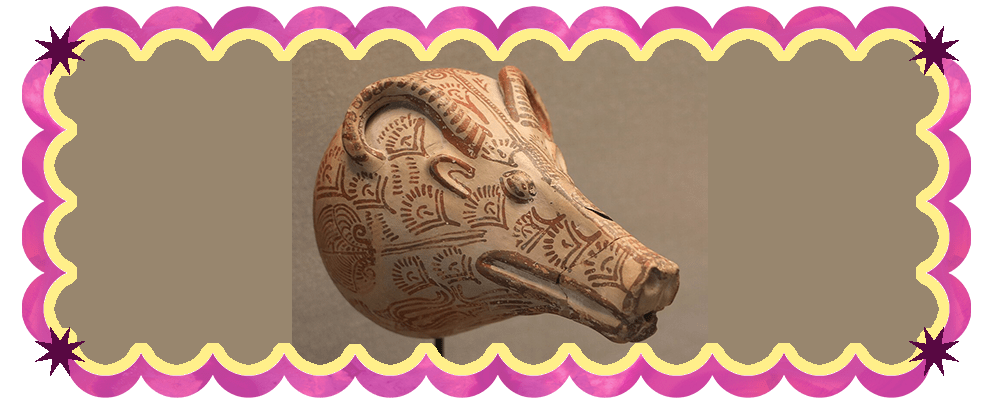
Francesco Bini, CC BY-SA 4.0, via Wikimedia Commons, Mycenean rhyton found at Ugarit
✷
We’re not all kings, though, so what about the average person?
✷
Though many of our surviving texts focus on royalty, we do have some sources from or about the religion of everyday people. Scholar Theodore J. Lewis has a fantastic article on the topic, which will be our primary source for this section of the post. Some sections here are heavily paraphrased, please check out the article if you’re interested and want a more thorough covering of the topic.
✷
Lewis notes that:
“All alike petitioned the gods for personal health and prosperity, for safe births, fit children and sturdy livestock, for snakebite remedies and sexual potency, for good weather, adequate water, and abundant crops.” [5: Lewis: 63]
✷
One way we can learn about the beliefs and culture of a population is by looking at names. This study of proper names of people and places is known as onomastics. [6: Merriam-Webster]. When looking at the names of people in Ugarit, it becomes clear that particular importance was placed on family and origin. Portions of names translate to things like: ““son of,’’ “daughter of,” “brother of,” “relative of,” “household of,” “husband of,” “wife of,” as well as references to inheritance that can refer to adoption.” [5: Lewis: 65].
✷
The names alone point to some of the basic values of the people of Ugarit, and other mythological sources reflect these values. The God Ilu was sometimes referred to with words that translate to “father, lover, and friend”. His worshipers are also shown to be his “children”. [5: Lewis: 66]. This along with the importance placed on origin in the names of individuals seems to suggest that the Gods were seen (at least on some level) as having a familial connection to their worshipers.
✷
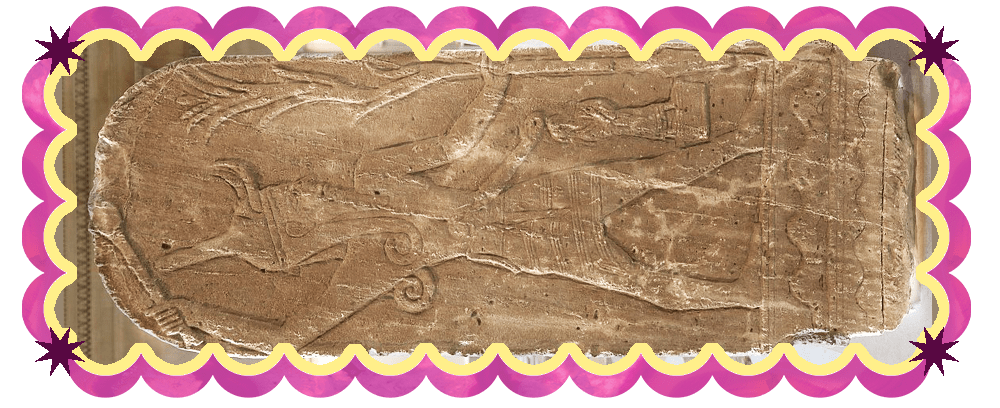
Francesco Bini, CC BY-SA 4.0, via Wikimedia Commons, Stela dedicated to Baal (turned on it’s side here)
✷
The importance of familial connection is furthered in the telling of a myth. The main portion of the myth isn’t relevant, but it has an interesting nugget in a section detailing the duties of an ideal son. The text mentions stetting up the “stela of his divine ancestor” [5: Lewis: 68-69]. Said ancestor is referred to with the name “Ilu-ibi” (this could also refer to one’s ancestor’s god, but there’s no popular academic consensus on the matter). [5: Lewis: 69]. Some of the sources mention making sacrifices to one’s Ilu-ibi, and the name Ilu-ibi appears at the very top of Ugaritic deity lists. [5: Lewis: 69]. Of additional note is the common location of family tombs being directly beneath the house, underscoring the constant presence of the ancestors.
✷
The Ugaritic deity lists are exactly what they sound like; long lists of a variety of deities. These, alongside the few surviving myths, will be the topic of a future post detailing the actual pantheon of Ugarit. I was going to include them here, but quickly realized that they’re going to take lots of study and quite a few words to cover everything in as much depth as I feel it requires. When that post is done, it’ll be linked HERE.
✷
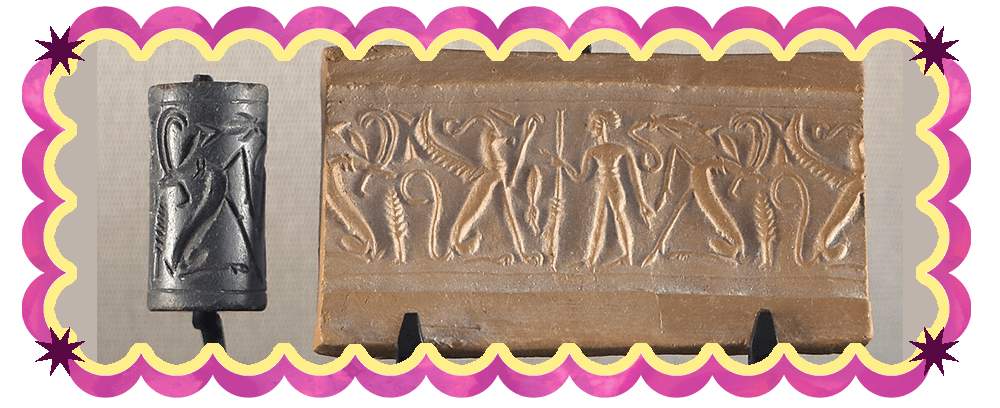
Francesco Bini, CC BY-SA 4.0, via Wikimedia Commons, Cylinder Seal from Ugarit
✷
Now, onto the fun part— taking all this information and figuring out how to synthesize it for modern paganism.
✷
Perhaps the first point of contention here is going to be the vast importance placed upon animal sacrifice in Ugaritic rituals. Most people these days are not comfortable with this kind of offering, and/or lack the resources necessary to carry something like that out. That said, we can use some principles of sympathetic magic to compensate when necessary.
✷
I’m borrowing this idea from some Hekate devotees who use effigies of black dogs as stand-ins for the actual sacrifice of said dogs. Essentially, this practice would involve creating some kind of replica of the desired animal or animal part, and then ritually destroying/”sacrificing” it in some way. The replica could be as simple as a paper drawing that you rip up, or as complex as a ceramic sculpture made to smash. The more time and effort involved in creating the substitution, the more energy that will be behind the sacrifice.
✷
The practice of offerers partaking in a communal meal from the animal sacrifice is also of note. I would imagine that offering already cooked meat and partaking in communion with the Gods would be another option. Doing so isn’t exactly attested to in the texts, but part of reconstructing a faith like this is making necessary adaptations to account for the hundreds of years that have passed since then.
✷
When it comes to other types of offerings, food and drink seem like solid staples. Objects of craft dedicated to a given deity are also a good option. This is pretty standard for pagan offerings, and definitely a good place to start if animal sacrifice is too heavy for you.
✷
One type of Ugaritic offering in particular was interesting to me. There seems to have been a lot of importance placed upon the dressing of idols of deities. I think that a modern practitioner could really run with this, perhaps even changing the idol’s clothing seasonally or for holidays/festivals. There probably aren’t any widely available Ugaritic deity statues for sale anywhere, which allows for additional creativity in making/upcycling one’s idols (which is in itself an offering).
✷
Another practice that we can infer from our sources is the probable necessity of some kind of purification before interaction with the Gods. The purification mentioned is of the king specifically, but if even the king must be purified before rituals, it’s not too far a jump to imagine that it may have been the same for the average person. We don’t have details on how the purification was done, but perhaps later study will allow for more inference.
✷
Lastly, it is impossible to miss the importance placed upon Ugaritic ancestry/ancestor worship. I can’t currently say what that ancestor worship might have looked like originally, save for the erecting of a stela which is attested. That said, the location of family tombs beneath houses shows just how close one’s ancestors were to daily life. Modern pagan ancestor worship would probably be as good a place as any to start for today’s practitioners, but I’ll be sure to report back here if I come across more details of the practice in ancient Ugarit.
✷
I think that more or less covers everything, but please do drop a comment if there’s anything I’ve missed. There’s a ton of information out there— I’ve only just scratched the surface. I’m going to continue working towards a reconstruction of ancient Levantine paganism in future posts, and I’d be happy to look into any questions you might have. This project is a labor of love, and I hope you find it as fulfilling as I have already.
✷

Sources:
✷
- 1: Archaeology and the Religions of Canaan and Israel, by Beth Alpert Nakhai, 2001
- 2: Ugarit on Wikipedia
- 3: In Pursuit of Meaning, Collected Studies of Baruch A. Levine, Volume I: Religion, by Baruch A. Levine, 2011
- The Descriptive Ritual Texts from Ugarit: Some Formal and Functional Features of the Genre
- 4: The Ugaritic Cultic Texts, by Paolo Merlo, from Handbook of Ugaritic Studies, 1999
- 5: Family, Household, and Local Religion at Late Bronze Age Ugarit, by Theodore J. Lewis, from Household and Family Religion in Antiquity, 2008
- 6: Onomastics Definition & Meaning by Merriam-Webster

 bogprism


Leave a comment