

Have you ever wondered what the people of the Palestine believed religiously before Judaism, Islam, and Christianity took hold of the region? It’s a topic that has been on the back of my mind for quite a few years, and I decided it was finally time to take the plunge. As a pagan with Palestinian heritage, I felt as though I would be remiss to not learn about the faiths of my ancestors.
✷
Unfortunately, there doesn’t seem to currently be much writing about Levantine Paganism from a Pagan perspective. All of the sources I’ve found are in academic books, anthologies, and journals. Fortunately for those of you that are interested, I actually like sifting through these sources. I was going to take a lot of notes for myself to begin with, but having an excuse to share what I learn in a more digestible format is absolutely wonderful. Expect this to be a series, as there’s lots to go through.
✷
To start us off, I wanted to do a quick and easy primer on some of the vocabulary and deities we’ll be exploring further in future blogs. I’m going to try to keep definitions simple for now, and will update them as links as I release more in depth information.

Sound good? Alright, let’s get into it.
✷

✷
The region that we’re going to be studying is referred to as the Levant. This refers roughly to the area of modern-day Palestine, Jordan, Lebanon, and Syria (as well as a few adjacent areas). [1] The exact area of the Levant has changed throughout different times and contexts though, so we’re not going to be too picky about selecting where our information comes from. There was a TON of syncretism there in the ancient world in general, anyways.
Canaan is a historic region that was centered around Palestine and Syria, though it sometimes stretches further beyond. The people of Canaan were known as Canaanites, and they were the pre-Israelite inhabitants of Palestine. [2] We’ll be looking at a lot of Canaanite sources in this series, but we’ll dip our toes in a few other pantheons along the way.
✷
You’ll hear the word syncretism a lot here, and for good reason. Syncretism is the combination of different forms of belief or practice. [3] A good example of this is the combined deity of Allat-Athena found at Palmyra.
✷
The reason we need to know about syncretism so much is because the region of the Levant was home to many different peoples over time. Often, this was due to power exchanges between nations all wanting the strategically placed Levant for themselves. Some of the peoples we’ll see on our journey include the Amorites, Egyptians, Hyksos, Hurrians, Hittites, and the Philistines (to name a few). [2]
✷
Due to this wealth of syncretism, you might come to recognize some of the characters and stories within the mythos we go over. Gods get imported, stories travel, and names change. I’ll try to make things as clear as possible, but we’re wading through a lot here. If I ever fail to mention something that you know and would like to add, please don’t hesitate to leave a comment!
✷
✷
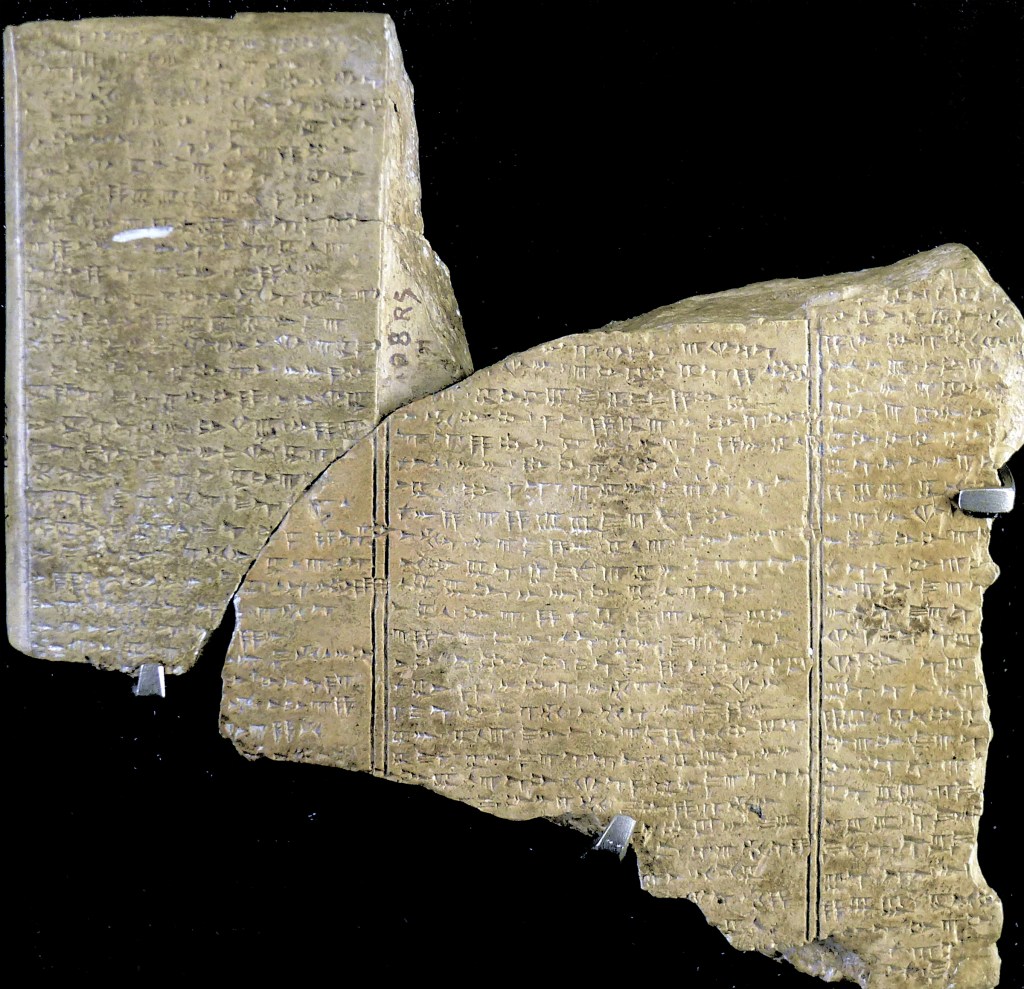
Ugarit was an ancient Levantine city located in what is now present-day Syria which thrived all the way from the Neolithic period up through the Late Bronze Age. [4]
✷
Ugaritic was the indigenous language of Ugarit. It’s closest linguistic relatives belong to the Canaanite language group. This group includes Hebrew, Phoenician, and Aramaic dialects. [4] Inscriptions written in Ugaritic have been found in Palestine, suggesting that users of the language may have lived there. [5]. There are a couple of key sources in Ugaritic that we’ll be going over.
Now I know this blog isn’t long yet, but I’ve come to the realization that including deities here is going to make things unwieldy. In an effort not to overwhelm, we’re going to be covering deities in the next few. I haven’t yet decided how I’m going to break them up, but I’ll try my best to organize them in a way that makes sense and is easy to follow.
✷
All that said, I’m going to be ending this a little bit early. This blog is by all means a living document, and I will be adding to it as I come across information that I think would be helpful. I’ll also be making a masterlist once I get a handful of these published to make everything easy to find and navigate.
✷
Lastly, you can find my sources below. If any of the links are broken, please don’t hesitate to let me know and I’ll get to fixing them ASAP.
✷
- 1: Encyclopedia Britannica; Levant
- 2: Encyclopedia Britannica; Canaan Historical Region
- 3: Merriam Webster; Syncretism Definition
- 4: An Introduction to Ugaritic by John Huehnergard
- 5: Encyclopedia Britannica; Ugaritic Alphabet
✷

 bogprism

Leave a comment