

The Uffington White Horse as a wonderful example of mindful caretaking of our history.
✷
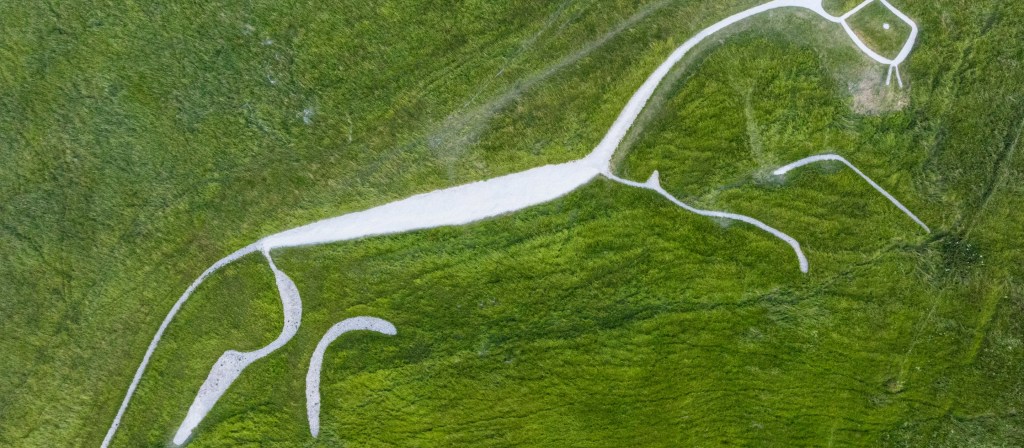
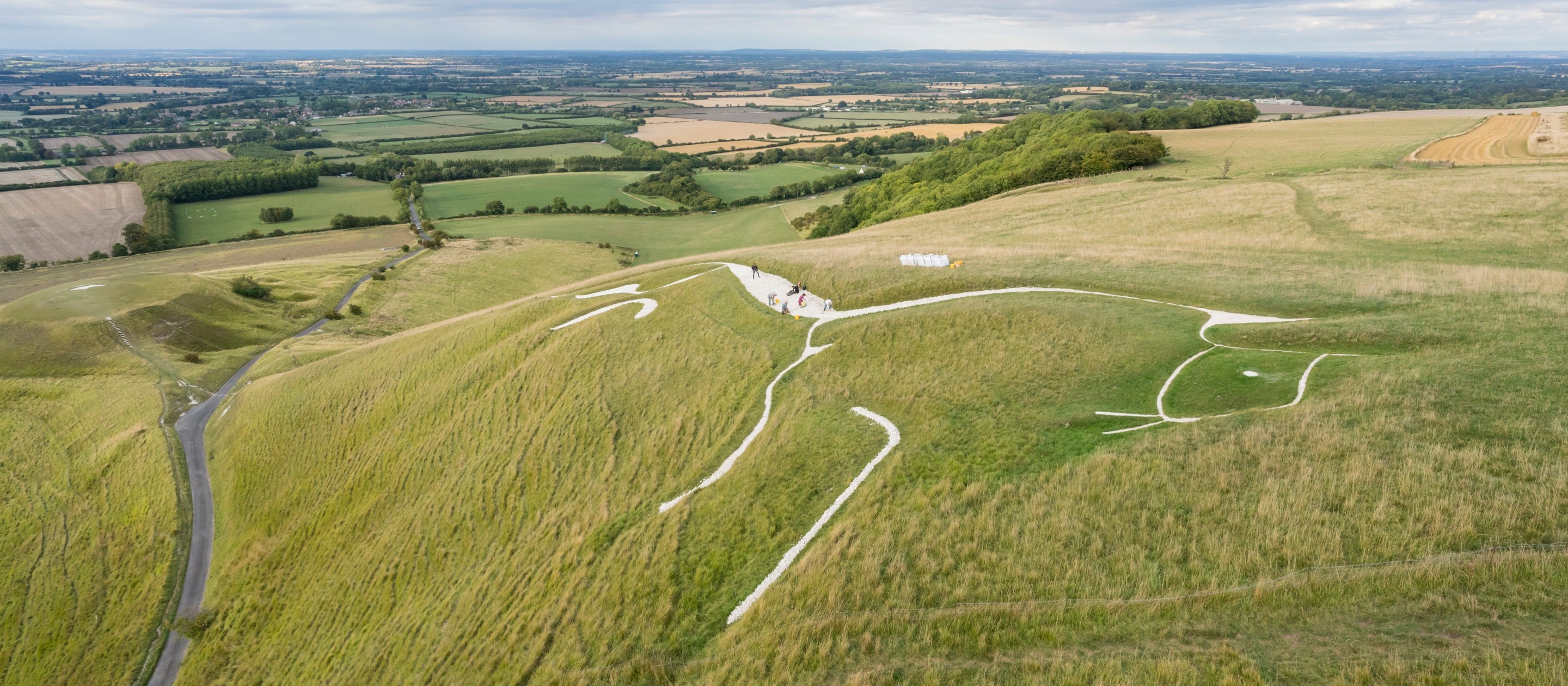
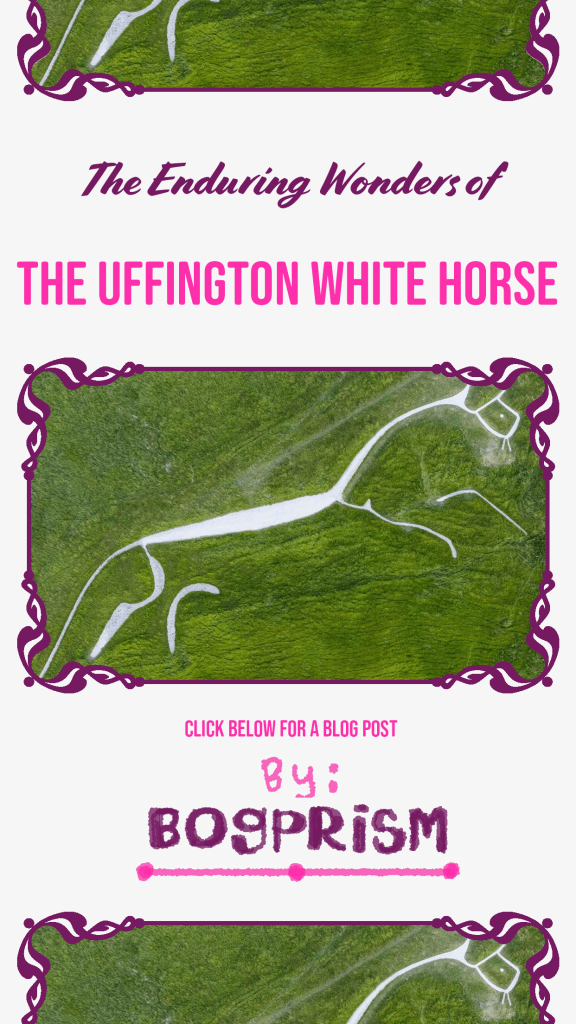
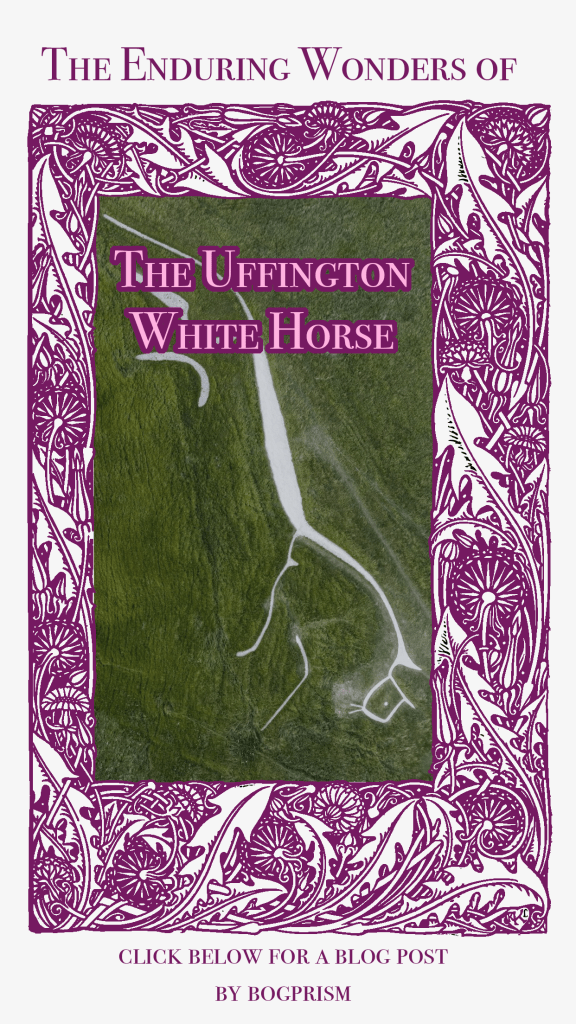
In Oxfordshire, there is a hill which contains a monument most remarkable. Sometime in history, ancient peoples carved the outlines of a horse into the earth. Then, the trenches were filled with white chalk that contrasted starkly with the green of the hill.
✷
✷
The Uffington White Horse is by no means the only such hill figure in England, though it may be one of the most renowned. The horse is best seen from the air, though there are some places in the surrounding area where one can catch a decent view of it. Nearby, one can also find the remains of late-Bronze Age fort called Uffington Castle. There are also a handful of burial mounds dating from the Neolithic period all the way up to the Saxon age scattered across the land.
✷
Clearly, Uffington was well inhabited throughout its ancient history. The horse itself may have been a sacred site or perhaps a symbol of the people that lived nearby. The actual reasoning behind the creation of the horse remains a mystery that we may never solve, however.
✷
The earliest written documentation of the geoglyph comes from around 1070 CE, where it is referred to as “White Horse Hill” in Charters from a nearby Abbey. Thanks to the Oxford Archaeological Unit’s scientific testing in 1995, we know that the monument itself is much older than this. Their analysis places the creation of the horse between 1400 and 600 BCE, between the Late Bronze Age and Early Iron Age. That is much older than previously expected, and also places the geoglyph in the right time frame for it to have potentially been made by the same people who created Uffington Castle.
✷
✷
While all of this information is fascinating, I must admit to you, dear reader, that I’ve been holding off on the most interesting nugget.
✷
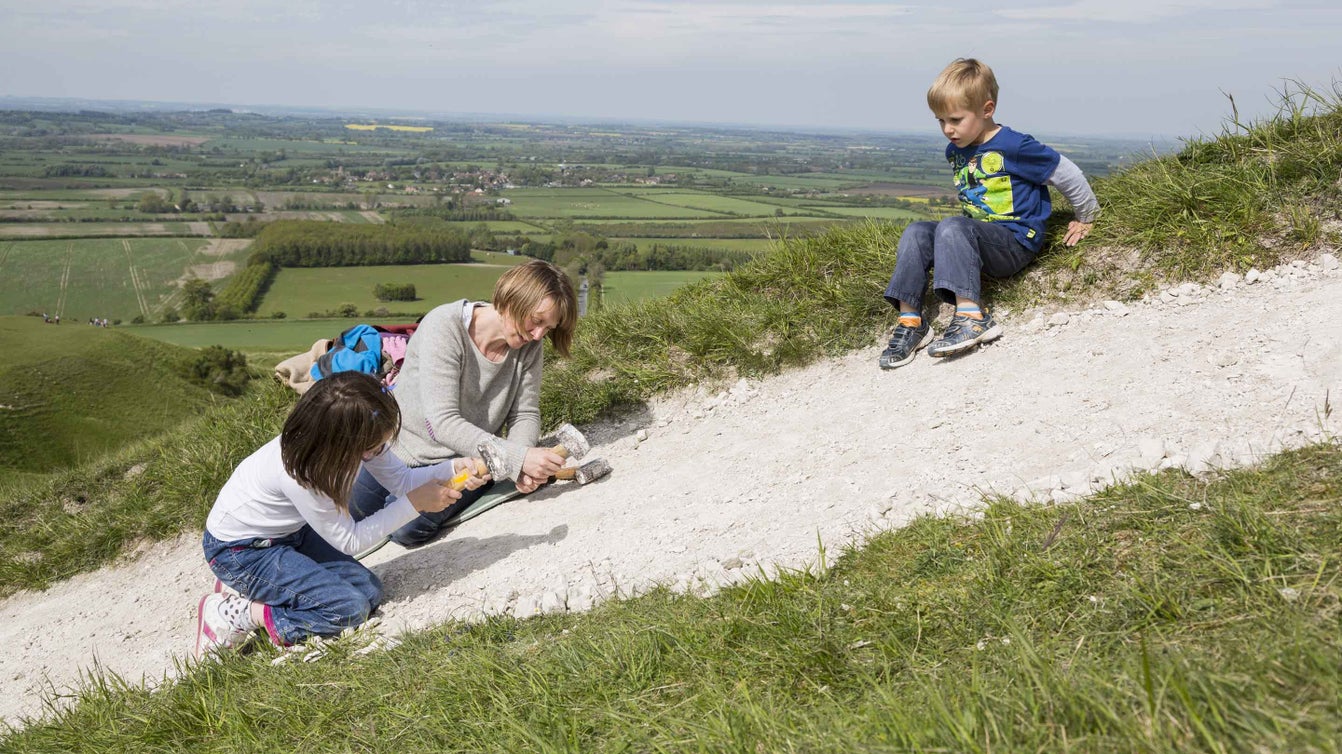
For this, one must simply think about the nature of the materials the horse is made out of. Chalk can blow away, and the grass of the turf can easily grow over the outlines. The Uffington White Horse is still visible today because the nearby people have maintained it year after year. That’s nearly 3,000 years of maintenance!
✷
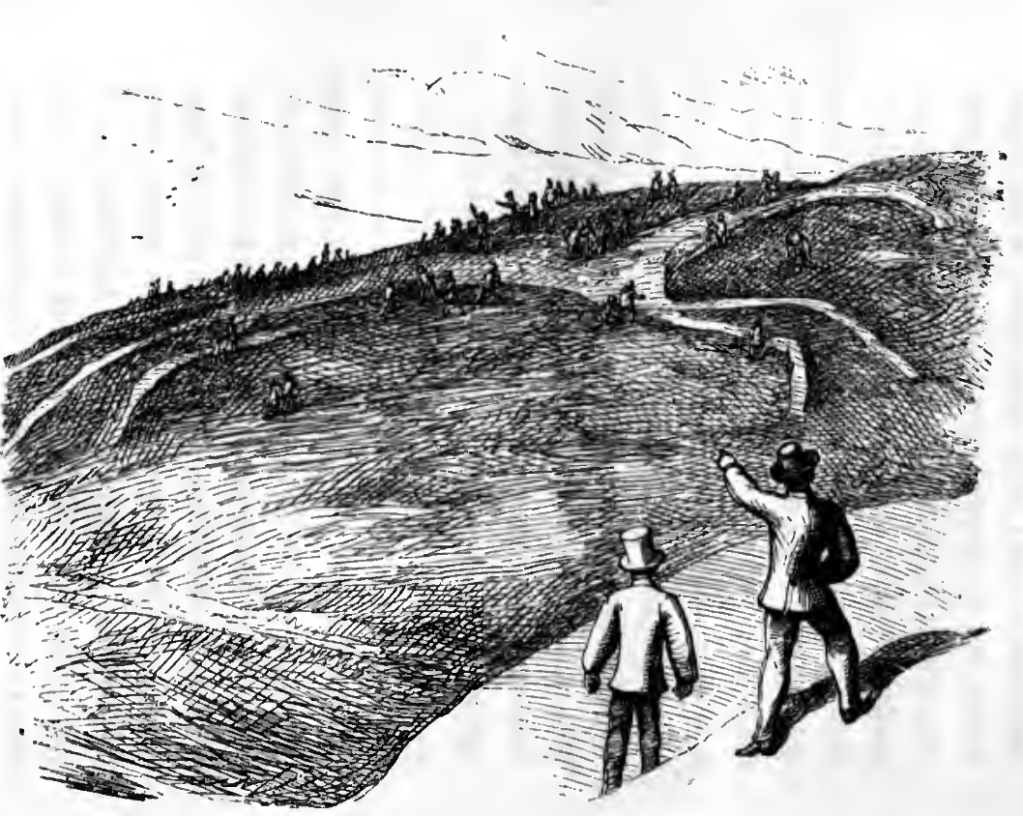
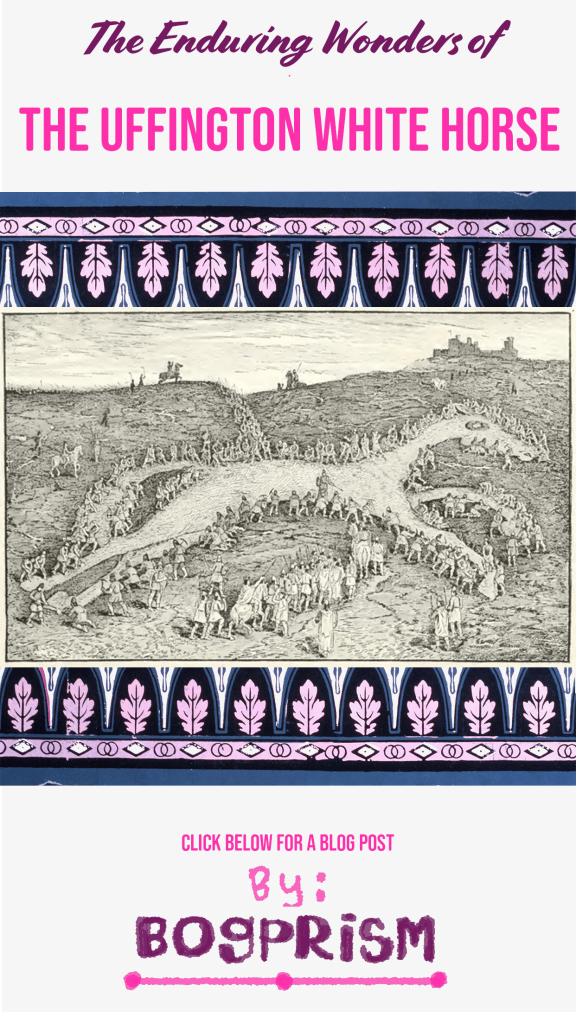
Once every seven years from at least 1677 until 1857, a local “Scouring Festival” took place to upkeep the White Horse and enjoy a feast in the nearby Uffington Castle. Scouring here refers to the process of packing fresh chalk into the outlines to ensure their visibility. In 1857, the tradition was temporarily halted as a crowd of roughly 30,000 people showed up and reportedly became “too rowdy.”
✷
✷
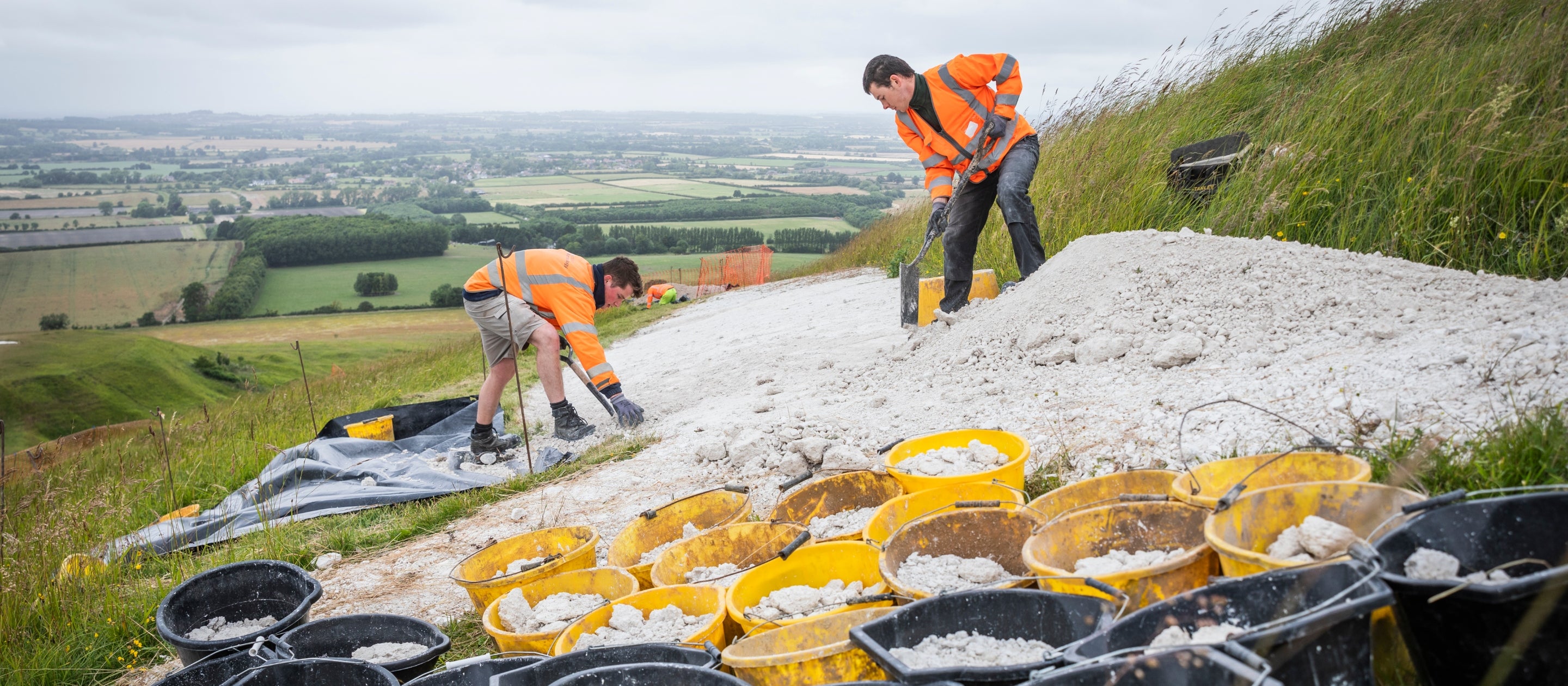
There’s a gap here in the information I can find in terms of how the Horse was maintained following 1857 up until 2009, where the National Trust once more allowed volunteers to participate in the scouring. The monument was apparently covered temporarily during WW2 to prevent pilots from using it to navigate, but that’s the only mention of the monument I’m finding in that time gap. Presumably the White Horse was maintained by local volunteers or a national organization in the interim, but I can’t find confirmation one way or another.
✷
These days, the National Trust continues to study and take care of the Uffington White Horse with a team of volunteers. They’re currently working with Oxford Archaeology to return some of the outlines to their original places, as years of scouring and re-cutting of the turf have naturally moved some of the outlines. In particular, the National Trust mentions that the head and neck of the horse had significantly narrowed over time. With their team of archaeologists, portions of the Horse were recut and moved back to their original positions. They’ve also endeavored to get more accurate dating on the monument, the results of which are expected later this year.
✷
✷
I haven’t mentioned the meaning or original purpose of the Uffington White Horse yet, and that’s been intentional. The short version is that we simply do not know, as we do not have any written record from the original builders. The long version involves looking at art, artifacts, and similar monuments created around the same time.
✷
Some people have noted the similarity of the White Horse to horses found on some first century BCE Celtic coins. It’s not hard to see why, either. The coins are stylistically similar, as well as coming from the same general time period. That doesn’t tell us much about their meaning besides the horse being an important cultural symbol at this time, though.
✷
Two of the most popular theories are that the monument was either for ritual or cultic purposes, or that it served as a tribal symbol of the people that lived nearby. Both are possible, though I’m personally inclined to lean towards the Horse having some religious or ritual significance. In particular, I believe this because of the geoglyph’s proximity to various burial mounds. Its’ enduring maintenance also points me in this direction. If it was merely a tribal symbol/crest of sorts, one would expect it to be allowed to fade once said tribe was no longer occupying the area. However, that’s not what happened here. The local people saw the monument as significant enough to maintain year after year through hard labor. I could be wrong, but this points more towards religion in my mind.
✷
There have been a few theories put forth about deities the Uffington White Horse might have been for, but I found their connections to be rather weak. A popular theory is that the Horse was made for the Celtic horse Goddess, Epona, but her introduction postdates the creation of the monument.
✷
One source suggested that the Horse is related to the Celtic sun God Belenus, as he rode in a chariot pulled by horses. That said, though Belenus does have some attestation in ancient Britain, the center of his cult was located in Italy. Much of his cult dates to the Roman period, though he likely predates it. This isn’t enough to wholly rule out Belenus of course, but I would expect to find evidence of his cult in the surrounding area if the White Horse were truly for him. I also think the connection of him riding in a chariot drawn by horses is rather weak, as plenty of deities are pictured similarly.
✷
I think it’s more likely that the Uffington White Horse was in some way linked to the neighboring burial mounds. It may have had some significance as a guardian of the dead, or perhaps been a meeting place for certain rites. Some have suggested it may have been used in sun or fertility rituals, which is certainly plausible. Horses were incredibly important to ancient British culture, so it wouldn’t surprise me for the monument to be linked to rites and ceremonies of life and/or death. The geoglyph may have also become a source of identity and pride for the local people, which would aid in its’ endurance.
✷
✷
Overall, the Uffington White Horse serves as a reminder of the enduring tenacity of the human people. It survives to this day against all odds because generations of people decided that it was important enough to take care of. Even if the meaning of the monument has been different to different people at differing times, its value as a cultural wonder has remained the same. I can’t help but imagine being able to volunteer for the next scouring, packing a new layer of chalk overtop of the old— some of it dating all the way back to ancient history. For the locals of Oxfordshire, I’m sure the connection is even more profound. I wouldn’t be surprised to learn that some of them are related to the originators of the Horse. Its’ legacy would be practically written into their DNA at that point.

I don’t want to just tell you about this incredible geoglyph, though. If you’d allow it, I’d like to provide a couple of questions/prompts to get you reflecting. These would be great for a journal, though simply pondering your way through them is just as likely to be beneficial.
✷

✷
Are you ready? Yeah? Let’s get into it!
✷
- What traditions have been passed on to you from your family? Do you know how far back your ancestors have been doing the same things year after year? What does it mean to you to bring these traditions further into the future?
- Are there any traditions in the area you live in that have been happening for over a decade? Fairs, festivals, and parades are a good place to start. How do these events benefit the community? If you’re so inclined, try researching their history. You might be surprised by what you find.
- If you could create a monument like the Uffington White Horse, what would it be and why? Where would you place it? What would be the difference between making it out of something transient like chalk versus something enduring like stone?
- Are there any monuments where you live? If so, do they need any TLC? Perhaps you could volunteer to help ensure that they’re around for the next generation.
- A small detour I’ll mention here is caring for cemeteries. Many cemeteries these days have headstones and statuary that could use some cleaning, and not enough help to do so regularly. In general, people used to spend a lot more time in cemeteries and keep them in much better condition than they are today. We don’t really have that kind of cultural obligation in today’s society, but the change always starts with the individual. Maybe you could be one of the early dominoes!
- I think I’ll do a blog on the history of cemeteries and their upkeep in the future if anyone’s interested. There’s a lot of interesting information therein that’s worth sharing.
- What about the White Horse do you think has lead to its’ endurance? Are there other landmarks that have survived for similar reasons?
✷
Lastly, here’s my list of sources for those interested in reading more. These are all pretty light reading— I skipped the extra academic stuff this time around because this was supposed to be a quick and easy blog. If I’m being honest, I didn’t expect to end up writing almost 2,500 words on the subject. If you want to learn more about the Uffington White Horse through academic sources, shoot me a comment or fill out my contact form and I’ll be happy to help point you in the right direction!
- “White Horse Hill” by the National Trust
- “History at White Horse Hill” by the National Trust
- “Our Work at White Horse Hill” by the National Trust
- “History of Uffington Castle, White Horse and Dragon Hill” by English Heritage
- “The White Horse of Uffington” by World History Encyclopedia
- “Against All Odds, England’s Massive Chalk Horse Has Survived 3,000 Years” by Emily Cleaver for The Smithsonian
- “Belenus” by Wikipedia
- “Uffington White Horse” by Wikipedia
- “The White Horse of Uffington, England’s mysterious chalk giant” by Lilith for Emadion
- “Bank holiday grooming for Oxfordshire’s White Horse” by Steven Morris for The Guardian
- The Scouring of the White Horse, Illustrated by Richard Doyle and Scanned by the Internet Archive
And I can’t forget the source I wish I’d found before I finished writing this:
- “Whence the White Horse of Uffington?” by Matthew Wills for JSTOR
✷
✷

 bogprism
Leave a comment