

cover photo by Patrick Robert Doyle on Unsplash
✷
Hey there bog bodies! Today, I’d like to share with you the wonderful world of homing or mail pigeons! Writing this blog certainly gave me a better appreciation for the majestic so-called rats of the skies. I’ll be drawing and painting along as we learn— why not join me? Let’s make ourselves some feathered friends!
✷
A quick note…
For some background information, let’s go over the difference between a carrier pigeon and a homing pigeon: A carrier pigeon is a specific breed of pigeon characterized by a large wattle at the base of the beak. The English carrier pigeon is commonly bred for its appearance for pigeon shows (think dog show but for birds). A homing pigeon, on the other hand, is specially trained and bred for speed and for their innate ability to return home. This article goes into the differences in more detail if you’re interested.
✷
Let’s make some art!
✷
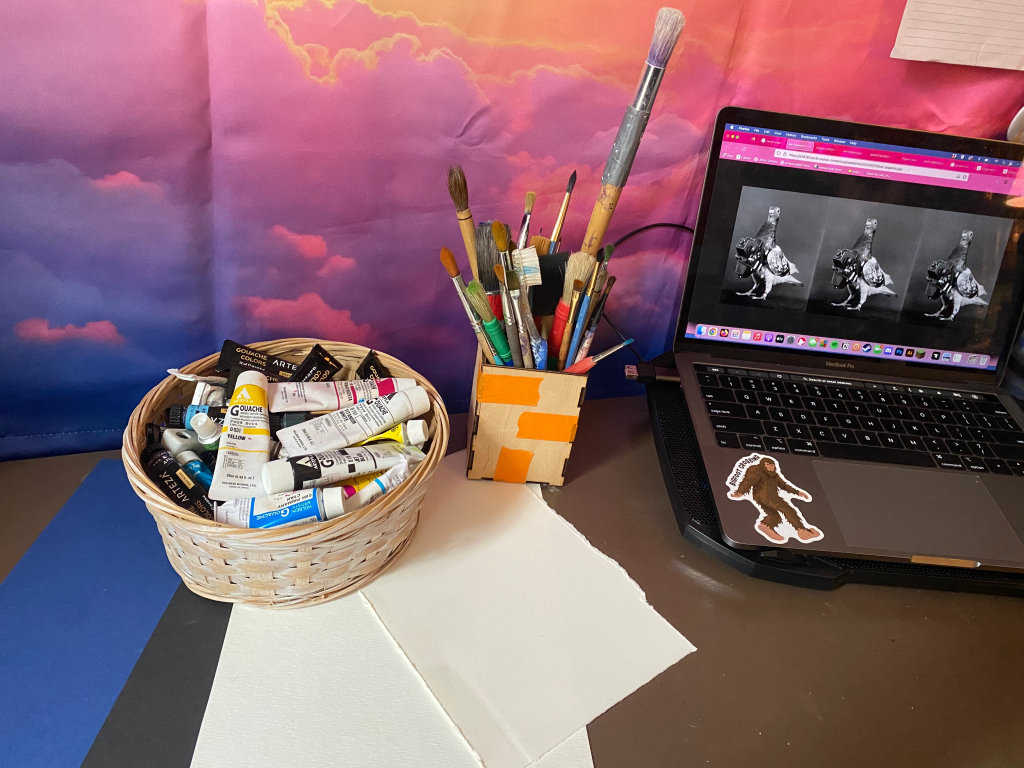
Since this is a “draw with me” blog, I’m going to be showing you my artistic process alongside the informational bits. For this project, I thought I’d use up some of these loose sheets of paper I had laying around. I originally intended to do the entire series in gouache, but changed my mind later on.
✷
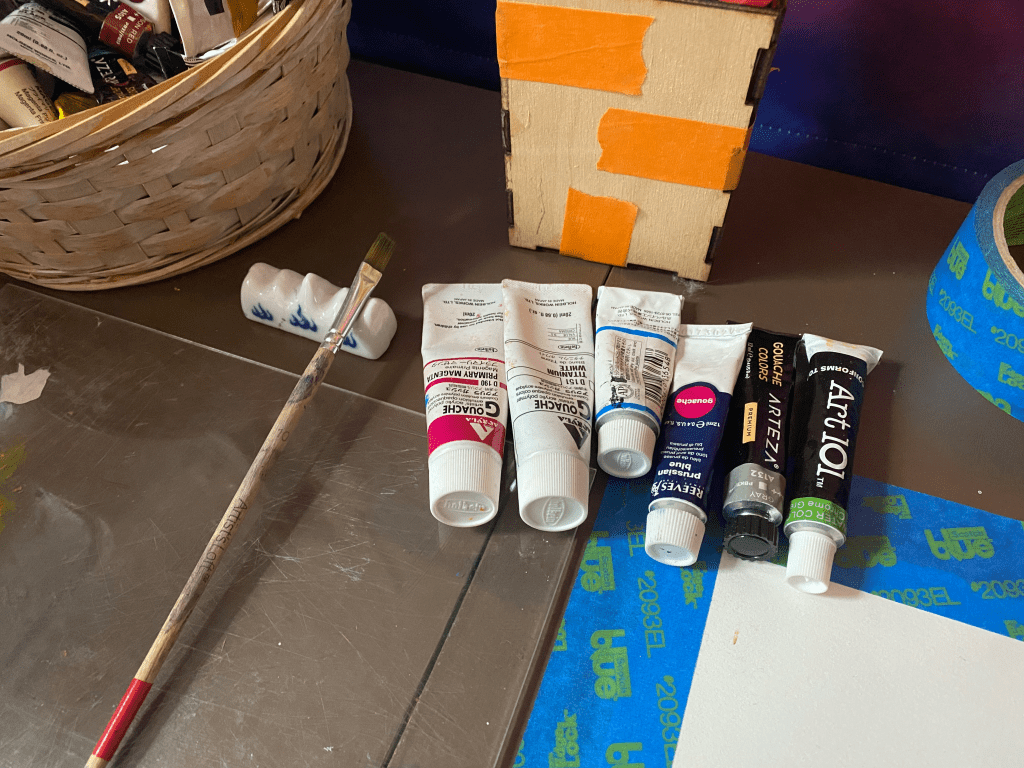
I wanted to start small and work my way up, so the first sheet I used is the small white one. I’ve gone ahead and taped the edges with blue painters tape, and pulled out a few different paint tubes to choose from while I work.
✷
Did you know that the pigeon was quite possibly the first domesticated bird?
✷
We have written record of domesticated pigeons going all the way back to Mesopotamia in 4500 BCE! (source) We don’t know for sure if they were being used to send messages this early, but they were certainly a part of everyday life. By the time of the ancient Greeks, people had learned how to train pigeons, and a pigeon post system existed (source).
✷
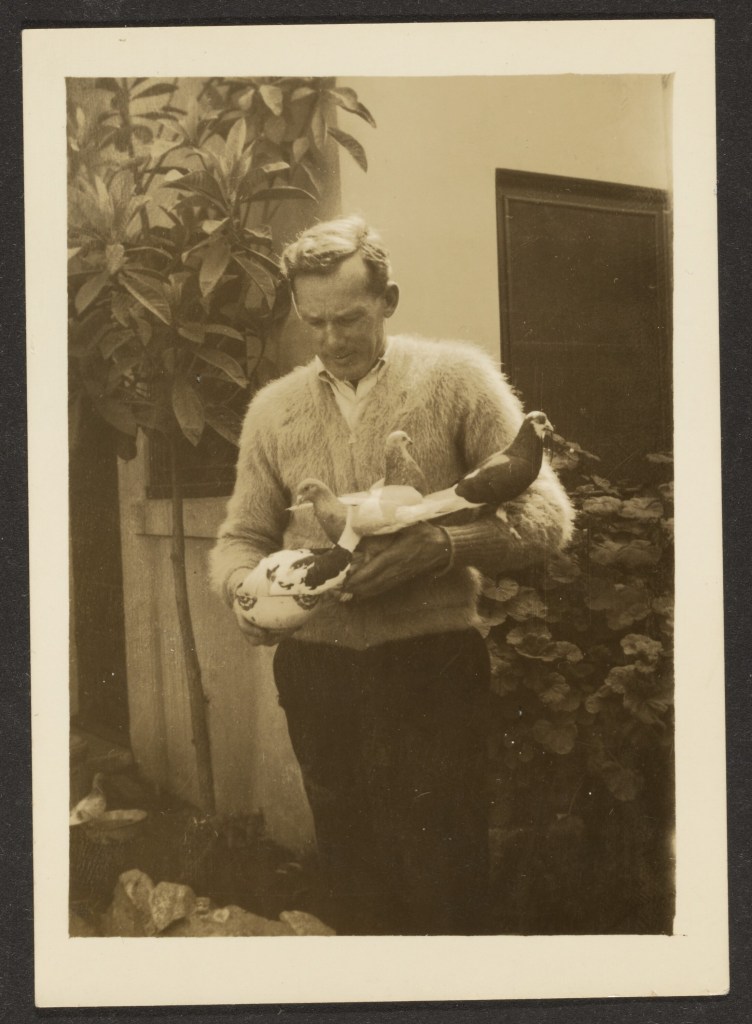
This image is titled “Man With Pigeons” and was taken by Louis Fleckenstein sometime between 1907 and 1943. It’s usage is courtesy of the Getty Museum’s Open Content program.
✷
So how exactly does a pigeon become a homing pigeon?
✷
It’s a combination of the pigeon’s innate ability to locate its roost and human training. We’re not sure exactly how their internal compass works, but there are some decent theories and research located here and here. The human training is fairly straightforward, and involves releasing the pigeon at increasing distances away from their home. A detailed explanation of this training can be found here.
✷
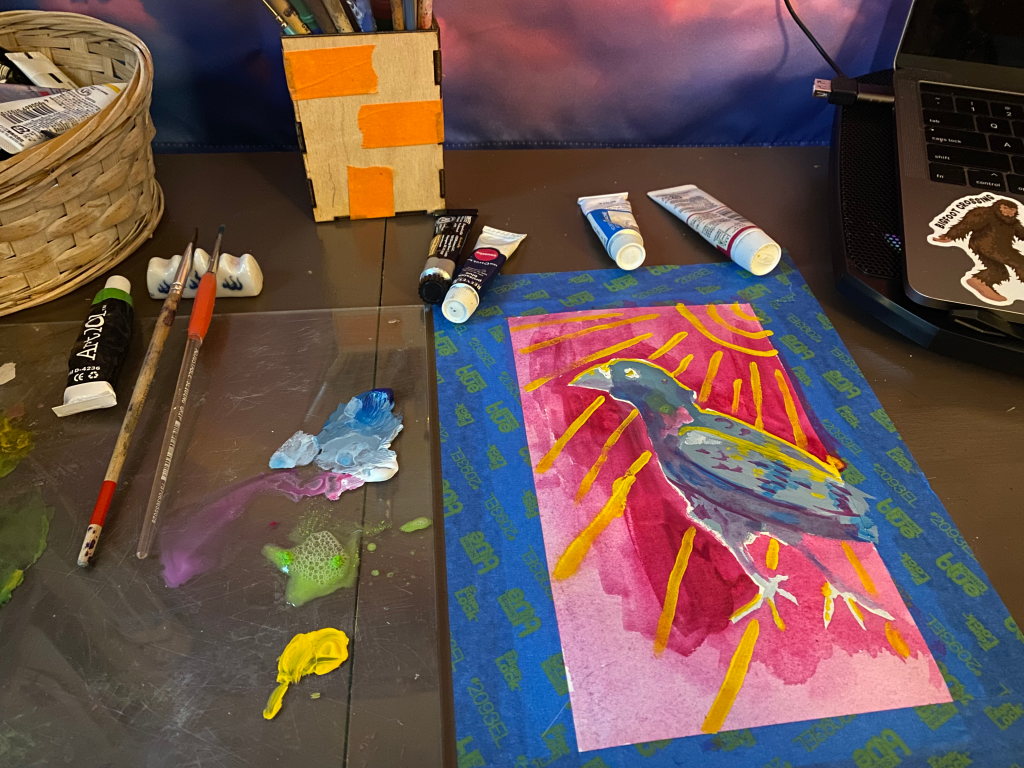
I couldn’t stop fantasizing about hand raising and training pigeons while I painted this. If I’m being honest, I meant to take more progress photos of this and was too lost in my thoughts to remember. Oh well, there’s always the next ones.
✷
Pigeons in War
✷
One of the more surprising facts I’ve learned while researching this blog is that carrier pigeons were used by a wide range of countries to deliver urgent communications during both World Wars. One notable WW1 pigeon was named Cher Ami, who was shot by enemy combatants while delivering a message from the so called “Lost Battalion”. For her service, she was later awarded the Croix de Guerre medal. Today, Cher Ami is stuffed and on display at the Smithsonian’s National Museum of American History (source).
✷
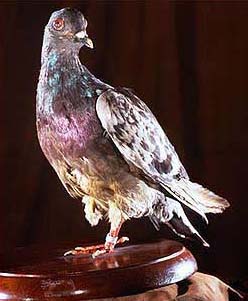
Cher Ami, courtesy of the United States Signal Corps via The Smithsonian Institution
✷
Throughout the course of both wars, homing pigeons were invaluable allies that saved numerous lives. Their accuracy and speed made them excellent messengers, even under heavy fire. In many cases, sending a pigeon was safer and more reliable than other communication lines. During WW2, around 96% of the 30,000+ messages the Army Signal Corps sent by pigeon reached their destination (source)!
✷
On to the next piece!
✷

✷
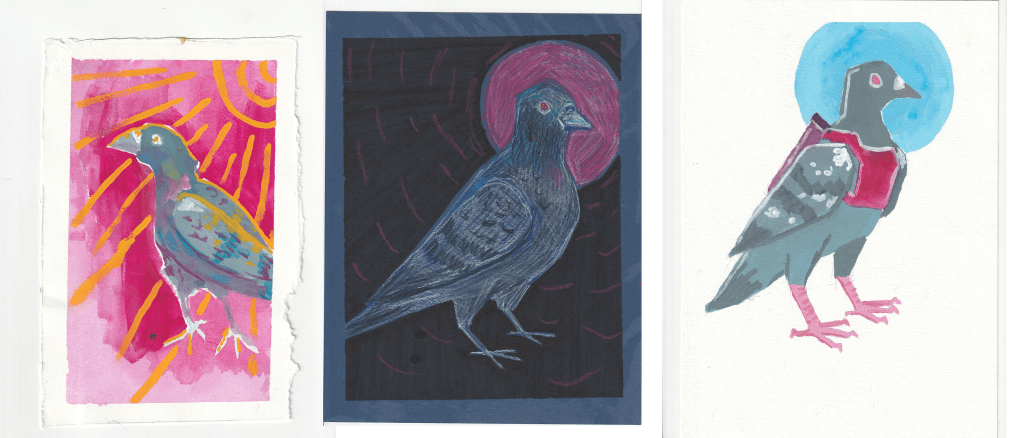
The next drawing I did was on the blue piece of paper. I wasn’t initially sure how to start, so I did a light blue watercolor sketch to get the general shape nailed down. From there, I used Caran d’Ache Neocolor crayons to layer on top. I kept thinking about how much pigeons have helped humans over the millennia, and I couldn’t stop myself from giving this one a pink halo. Honestly, I think pigeons deserve to be revered a lot more than they are these days.
✷
Pigeons in the Modern Age
✷
That said, there are still people today using homing pigeons for a variety of reasons! Plenty of people have raced and bred pigeons well into the modern age. The American Racing Pigeon Union’s website is a good place to check if you’d like to learn more about the pigeon racing hobby.
✷
Racing isn’t the only thing homing pigeons are being used for today, though. In 2017, a pigeon was caught with a backpack full of drugs that it was being used to smuggle, likely across the border between Kuwait and Iran. The bird’s backpack was full of 178 pills of ketamine! (source). Talk about resorting to creative methods!

✷
One last piece!
✷
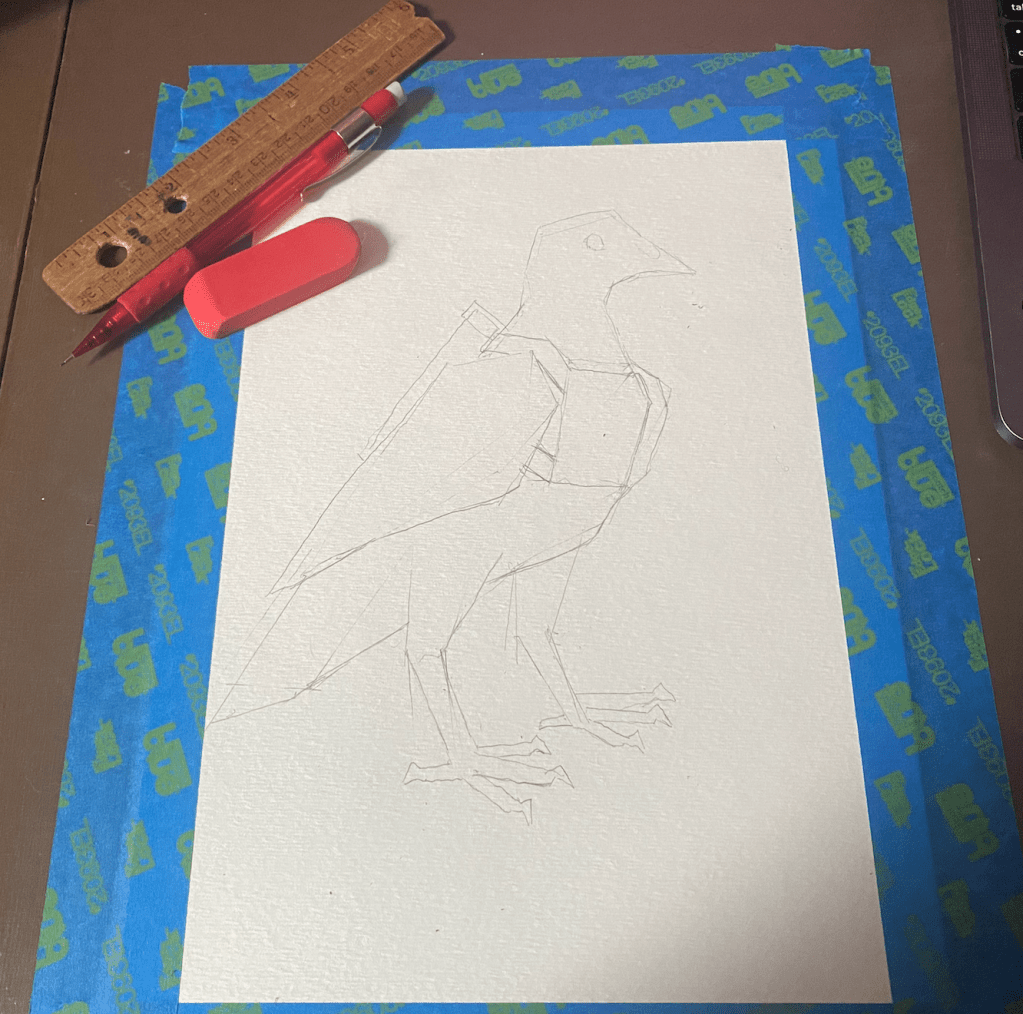
Here’s the start of the final piece in this series!
✷
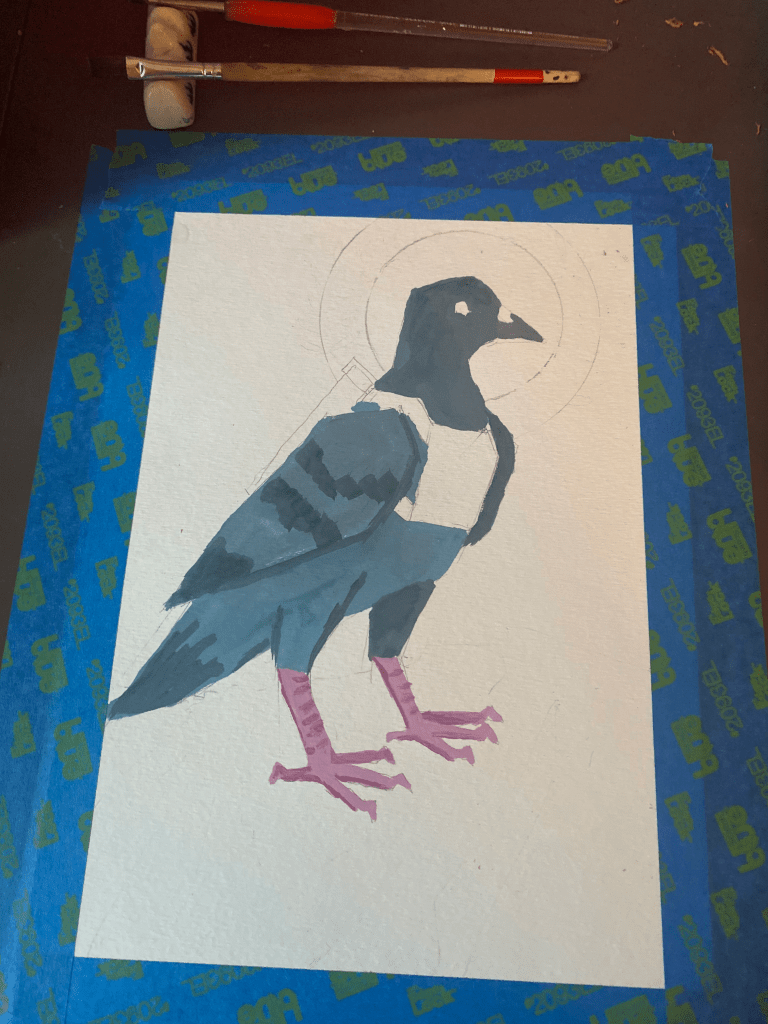
While we’re on the topic of creativity, it’s time to start the third and final piece of this mini series! Pigeon number three gets a backpack, since we are learning about homing pigeons after all. I decided to go back to paints for this one, but this time with a sketch underneath. I originally thought it would be cool to do the sketch completely out of straight lines, so that’s what you’re seeing above.
✷
Here’s the piece with a bit of paint!
✷
I’ll be honest here and say that I wasn’t quite sure how to round out the background on this piece. Combine that with an upcoming move, and I had to accept that this was the furthest I could do right now. You might also notice that I didn’t paint the black paper I showed in the beginning either, which happened for the same reasons. Perhaps I’ll come back to the series in the future with a part two and some more fun facts.
✷
✷
And here’s the final pieces scanned in for higher quality documentation. I’ve really enjoyed the whole process of creating this blog, and plan to make more content like this in the future. I’ve missed writing to be honest, and my blog has been scratching that itch for me.
✷
Overall, I hope that this blog has taught you something new and increased your appreciation for these majestic birds!
✷
What’s the prettiest or coolest pigeon you’ve ever seen? My favorite where I live is white with black spots all over it; perhaps if I can get a picture sometime I’ll have to draw her. Pictures of pigeons or your own art are always appreciated! I’d love to see what you create!
✷

 bogprism
Leave a comment